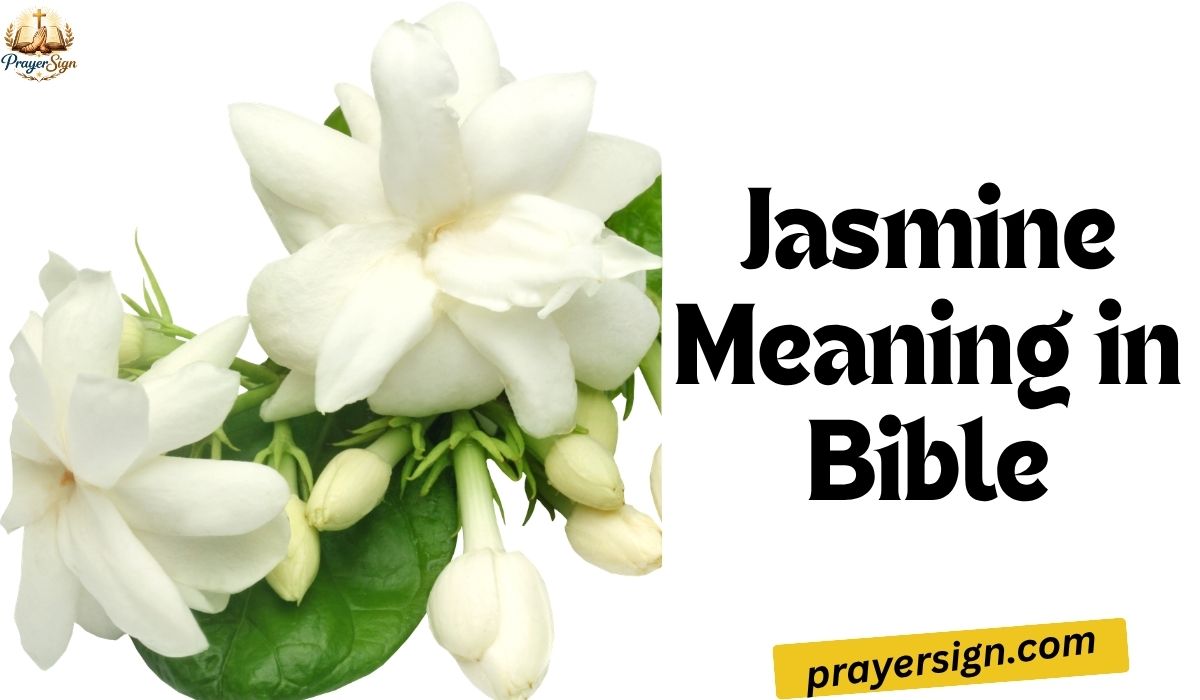
Have you ever wondered if a flower could carry a message straight from God?
The jasmine meaning in Bible is one of those beautiful topics that sits at the crossroads of faith, nature, and divine symbolism. Whether you came across this name in Scripture, in a dream, or you simply carry this name yourself — there is something deeply meaningful here for you.
Let’s explore what jasmine truly represents in a biblical and spiritual context.
Biblical Meaning of Jasmine — What the Scripture Tells Us
The jasmine meaning in the Bible is rooted in themes of purity, grace, and God’s divine gift to humanity. While the word “jasmine” does not appear by name in most English Bible translations, the flower is widely believed to be part of the fragrant blossoms referenced throughout the Song of Solomon and other poetic books of Scripture. Its sweet scent symbolizes the presence of the Holy Spirit and the beauty of God’s creation.
In biblical tradition, fragrant flowers and plants were never mentioned casually. They carried weight. They represented something sacred. Jasmine, with its white petals and intoxicating perfume, fits naturally into the biblical imagery of holiness and divine love.
The Song of Solomon (2:1) speaks of the rose of Sharon and the lily of the valleys — both understood to represent beauty, purity, and the beloved of God. Many biblical scholars and theologians place jasmine within this same family of sacred blooms, connecting it to themes of spiritual devotion and closeness to God.
Is Jasmine in the Bible? Here’s the Truth
This is one of the most common questions people ask, and it deserves a clear answer.
Jasmine is not mentioned by that exact name in the King James Bible or most standard translations. However, the plant is native to the lands of the ancient Middle East, including Israel and surrounding regions. It almost certainly grew in the gardens and valleys described in the Old Testament.
The Hebrew word “yasmin” (יַסְמִין) — from which the English name Jasmine is derived — refers directly to this fragrant flower. The name appears in ancient Semitic languages and is deeply embedded in the cultural and spiritual life of the biblical world.
So while the word “jasmine” may not sit visibly on a Bible page, its presence, its scent, and its symbolism are woven through Scripture in a quiet but powerful way.
What Is the Real Meaning of Jasmine?
The real meaning of jasmine goes beyond just a pretty flower. The name jasmine comes from the Persian word “yasmin,” which means “gift from God” or “God’s gift.” It is associated with beauty, grace, purity, and divine love. In many cultures — including Hebrew, Christian, and Islamic traditions — jasmine represents something given generously by heaven itself.
It is a flower that blooms in the dark. Jasmine often releases its strongest fragrance at night, which spiritually speaks to those who shine brightest in their most difficult seasons.
Key Symbolic Meanings of Jasmine:
- Purity — White jasmine blossoms are universally connected to innocence and a clean heart
- Divine Love — The flower is often associated with God’s unconditional affection for His people
- Hope — It blooms persistently, even in harsh conditions
- Spiritual Awakening — Its scent is said to calm the mind and open the heart to prayer
- Grace — The effortless beauty of jasmine mirrors the grace freely given by God
Why Does Jasmine Mean “Gift from God”?
Jasmine means “gift from God” because of its Persian and Hebrew linguistic roots. The original word “yasmin” was used to describe something precious, fragrant, and heaven-sent — qualities the ancient world associated only with divine generosity. In the biblical worldview, any beautiful thing that brought comfort, healing, or joy was seen as a direct blessing from God. Jasmine, with its healing properties and heavenly scent, perfectly embodied that belief.
Many parents who name their daughters Jasmine do so with this meaning in mind — a child who is a gift, a blessing, a grace from above.
In early Christian communities, flowers like jasmine were used to adorn places of worship and prayer. They were not decoration. They were testimony — silent witnesses to God’s creative goodness.
Jasmine Meaning in Hebrew — The Deeper Linguistic Root
In Hebrew, the name Jasmine is connected to the root word “yasmin” (יַסְמִין), which directly translates to the jasmine flower. Hebrew is a language where names carry prophetic weight. Every name in Scripture reveals something about a person’s destiny or character.
| Hebrew Root | Meaning | Spiritual Connection |
| Yasmin (יַסְמִין) | Jasmine flower | Purity, beauty, grace |
| Yashar (יָשָׁר) | Upright / righteous | Moral integrity |
| Shemen (שֶׁמֶן) | Oil / fragrance | Holy anointing |
| Yasha (יָשַׁע) | To save / deliver | Salvation, God’s rescue |
The connection between jasmine’s fragrance and the concept of holy anointing oil in the Bible is particularly powerful. Throughout the Old Testament, fragrant oils and perfumes were used in sacred rituals — anointing kings, consecrating priests, and welcoming God’s presence into the tabernacle.
Jasmine’s scent placed it in that holy category in the ancient Hebrew imagination.
What Does the Name Jasmine Mean in Christianity?
In Christianity, the name Jasmine carries the meaning of “gift from God” and is associated with purity, spiritual beauty, and divine grace. Christian tradition often links jasmine to the Virgin Mary — many churches and cathedrals in Mediterranean regions grow jasmine on their grounds as a symbol of Mary’s purity and gentleness. The white flower also represents the resurrection — new life blooming from what seemed dormant.
If your name is Jasmine, many Christians would say your name is a daily reminder that you are intentionally and lovingly placed here by God — not by accident, but as a gift to the world around you.
What Jasmine Represents in Christian Faith:
- White petals = a pure heart and clean conscience before God
- Night blooming = faith that grows in darkness and uncertainty
- Persistent fragrance = a life that leaves a godly impression on others
- Climbing vines = spiritual growth and reaching upward toward God
Spiritual Meaning of the Name Jasmine
Spiritually, the name Jasmine speaks of a person who carries light into dark places. People named Jasmine are often described as warm, nurturing, deeply intuitive, and naturally drawn to things of the spirit.
From a broader spiritual perspective — beyond just Christianity — jasmine is universally seen as a flower that connects the earthly and the divine. In many faith traditions, burning jasmine incense or placing jasmine flowers during prayer is believed to create an atmosphere where spiritual connection becomes easier.
In the Christian spiritual tradition specifically, this connects to Paul’s words in 2 Corinthians 2:15 — “For we are to God the pleasing aroma of Christ.” To live as jasmine lives — fragrant, pure, persistent — is a beautiful picture of a spirit-filled life.
Jasmine Meaning in Islam
In Islam, the jasmine flower (known as “Yasmin” in Arabic) is deeply beloved. The name Yasmin is one of the most popular girls’ names in Muslim communities worldwide. It represents beauty, purity, and paradise. Islamic tradition holds that paradise (Jannah) is filled with beautiful gardens, and jasmine is considered one of the flowers of heaven.
While Islam, Christianity, and Judaism have theological differences, the symbolic meaning of jasmine across all three Abrahamic faiths is strikingly consistent — purity, divine gift, and heavenly beauty.
Biblical Interpretations of Jasmine in Dreams
Dreams carry meaning throughout the Bible. From Joseph’s dreams in Genesis to Daniel’s visions, God has long communicated through the imagery of sleep. If jasmine appears in your dream, here is how to interpret it through a biblical lens:
- Seeing jasmine flowers in bloom — A season of grace and blessing is coming. God is about to do something beautiful in your life.
- Smelling jasmine without seeing it — God is present even when you cannot see clearly. Trust His guidance.
- Holding jasmine — You are being entrusted with something pure and precious — a relationship, a calling, or a responsibility.
- Wilting jasmine — A warning to guard your spiritual life and not neglect prayer and community.
- Giving jasmine to someone — You are called to be a blessing and a gift to someone in your life right now.
- Receiving jasmine as a gift — God is affirming your worth and calling you beloved.
Dreams should always be tested against Scripture and confirmed through prayer and wise counsel — but these symbolic meanings align well with the broader biblical language of flowers and fragrance.
Spiritual Significance and Symbolism of Jasmine
The spiritual symbolism of jasmine is rich, layered, and genuinely moving when you sit with it.
Jasmine grows as a vine. It does not stand alone — it reaches, it climbs, it clings. Spiritually, this is a picture of a soul that knows it cannot thrive in isolation. It needs something greater to hold on to. For believers, that something is God.
The flower is small and seemingly fragile. Yet its fragrance is enormous — far greater than its size would suggest. This speaks powerfully to those who feel small, overlooked, or underestimated. Your impact, like jasmine’s scent, can be far greater than your appearance suggests.
Step-by-Step: How to Apply Jasmine’s Spiritual Meaning to Your Faith Life
- Reflect on your identity — If you carry the name Jasmine, meditate on what it means to be a “gift from God.” How does that shape the way you see yourself?
- Embrace seasons of darkness — Just as jasmine blooms most powerfully at night, trust that God is growing something in you during your hardest seasons.
- Pursue purity of heart — Let the white petal be a personal symbol of your commitment to honesty, integrity, and a clean inner life.
- Be a fragrance to others — Ask yourself daily: what impression am I leaving? Am I bringing peace, warmth, and grace into the rooms I enter?
- Reach upward — Like a climbing vine, intentionally grow toward God through prayer, Scripture, and community.
Jasmine Name Personality — What Faith and Culture Say
People named Jasmine tend to carry certain qualities that align beautifully with the flower’s symbolism. Across cultural and spiritual traditions, the Jasmine personality is described as:
- Warm and approachable — people feel at ease around them
- Deeply intuitive — they often sense things others miss
- Creative and expressive — a natural gift for beauty and artistry
- Compassionate — a genuine desire to nurture and care for others
- Spiritually sensitive — drawn to prayer, worship, and matters of faith
In Christian tradition, these are qualities of someone who reflects the fruit of the Spirit — love, joy, peace, patience, kindness, goodness, gentleness (Galatians 5:22-23).
Practical Lessons and Faith Insights from Jasmine’s Meaning
You do not need to be named Jasmine to receive the message this flower carries. Here are real, practical lessons any believer can take from jasmine’s biblical and spiritual meaning:
- You are a gift. Not a mistake. Not an accident. A deliberate, loving gift placed into this world by God.
- Purity still matters. In a world that often dismisses the value of a clean conscience, jasmine reminds us that inner purity is beautiful and worth protecting.
- Your darkest season may produce your strongest fragrance. Pain refines. Pressure reveals. Trust the process.
- Small does not mean insignificant. God uses small, fragrant things to fill entire rooms with His presence.
- Reach toward something higher. Do not try to do life alone. Lean on God, on community, on Scripture.
Many people who have studied the spiritual meaning of their name — or of flowers they feel drawn to — report a renewed sense of purpose and identity. There is real value in understanding that even the natural world around us carries God’s fingerprints.
FAQs About Jasmine Meaning in Bible
Is jasmine specifically mentioned in the Bible by name?
No, the word “jasmine” does not appear by name in most English Bible translations. However, jasmine is native to biblical lands, and its scent and symbolism are widely connected to the fragrant flowers described in the Song of Solomon and other poetic books of Scripture.
What does jasmine mean in Hebrew?
In Hebrew, jasmine is connected to the word “yasmin” (יַסְמִין), which means the jasmine flower. It is associated with purity, beauty, and divine grace. The broader root carries connections to righteousness and fragrance — both spiritually significant concepts in Hebrew Scripture.
Why is jasmine considered a gift from God?
The name jasmine comes from the Persian “yasmin,” which ancient cultures understood to mean something precious and heaven-sent. In biblical thinking, anything beautiful, healing, and fragrant was considered a direct blessing from God — which is exactly what jasmine is.
What does the name Jasmine mean in Christianity?
In Christianity, Jasmine means “gift from God” and is associated with purity, grace, and divine love. The white flower is often linked to the Virgin Mary and the resurrection — symbols of innocence and new life in Christ.
What is the spiritual message of jasmine for someone today?
The spiritual message of jasmine is this: you are purposed, you are gifted, and your life has a fragrance that can touch others even when you do not realize it. Bloom where you are planted, especially in the dark seasons — that is often when your impact is greatest.
Does jasmine have meaning in Islam as well?
Yes. In Islam, “Yasmin” (the Arabic form of Jasmine) is a beloved name meaning beauty and purity. It is connected to the gardens of paradise in Islamic tradition, making it one of the most honored floral names across Abrahamic faiths.
Conclusion
The jasmine meaning in the Bible is more than just a linguistic curiosity — it is a spiritual invitation.
This small, fragrant flower carries a message that has echoed through centuries: you are a gift, purity has power, and even in your darkest night, you can bloom with a beauty that transforms the space around you.
Whether you are studying this topic for personal faith, for someone dear to you, or simply out of curiosity — the message is the same. God speaks through creation. He always has. And jasmine is one of the most tender, fragrant ways He chooses to say: you matter, and you were made on purpose.
Let that truth settle in your heart today.

Hi, I’m William, the voice behind PrayerSign — a space dedicated to sharing powerful prayers and meaningful Bible verses for everyday life. My mission is to help people find peace, strength, and guidance through God’s word, no matter what situation they are facing.