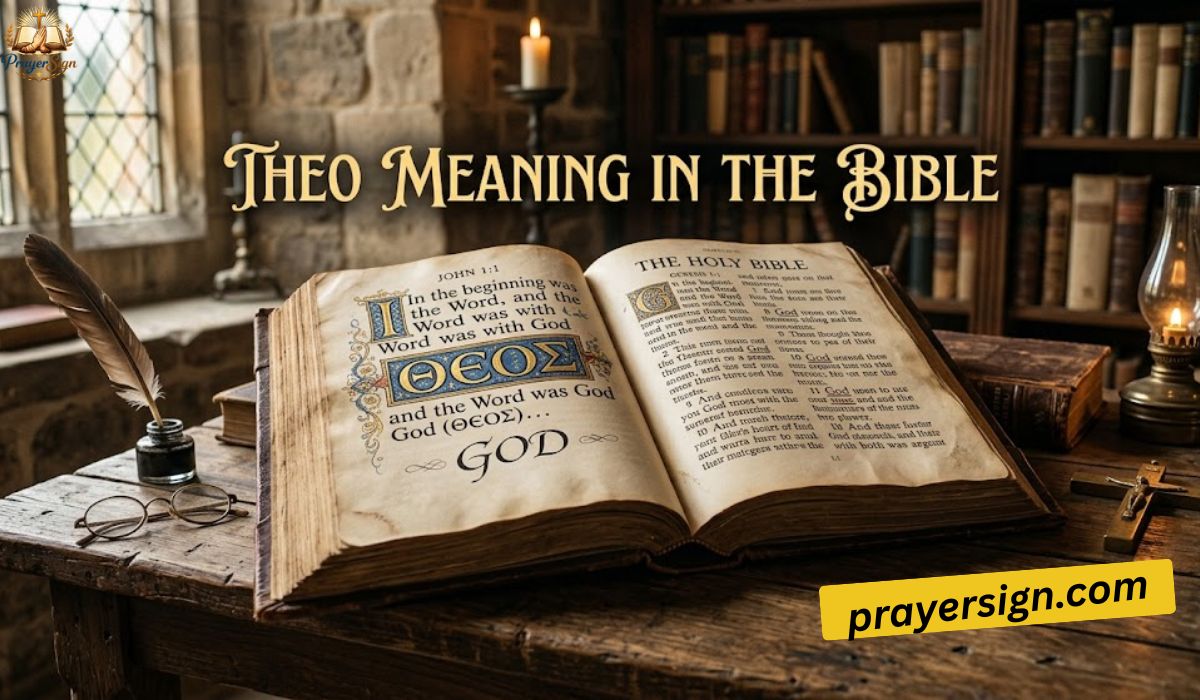
A single syllable. Four letters. And yet the name Theo carries the weight of one of the most important words in all of Christian theology — the Greek word for God.
Parents choosing this name for their child often sense there is something meaningful behind it. Scholars, theologians, and curious believers searching for the Theo meaning in the Bible discover that this is not just a trendy modern name. It is a fragment of ancient language that has been woven into Scripture, church history, and the Christian faith for over two thousand years.
This article covers everything you need to know: the full Greek origin, the biblical and theological definitions of Theos, whether Theo appears in Scripture, its connection to names like Theophilus and Theodore, Bible verses tied to its meaning, the spiritual significance Christians attach to it, and what it means for faith-filled families considering this name today.
By the time you finish reading, you will understand exactly why Theo is far more than a nickname.
Quick Answer: What Does Theo Mean in the Bible?
Theo comes from the Greek word Theos (θεός), meaning God. It is not a standalone biblical name but functions as a powerful prefix in theophoric names — names that carry God’s name within them. The most notable biblical example is Theophilus, meaning “loved by God” or “friend of God,” addressed directly in the Gospel of Luke and the Book of Acts. Theo, therefore, is deeply rooted in biblical language and carries the theological meaning of divine presence and relationship with God.
What Does Theo Mean in the Bible?
The Full Meaning of Theo
Theo is not an invented modern name. It is a shortened form — a prefix, technically — drawn from one of the most foundational words in the entire New Testament: Theos, the Greek word for God.
The New Testament was written in Greek, and Theos appears thousands of times throughout it. Every time you read “God” in your English Bible — in John 3:16, in Romans 8:28, in Hebrews 11:6 — the word behind it in the original Greek is Theos. Theo, therefore, is a direct linguistic fragment of that word.
When someone bears the name Theo, they are carrying, in the simplest possible form, the ancient Greek word for the divine.
Biblical meaning of Theo: God; the divine; the one who is supreme above all.
This is not a speculative or symbolic interpretation. It is a straightforward linguistic fact rooted in how the early church used language, how the New Testament was written, and how Christian theology developed.
Biblical and Spiritual Significance
In the biblical worldview, names were never chosen lightly. A name reflected identity, calling, and relationship. When the prefix Theos was placed at the beginning of a name — creating what scholars call a theophoric name — it meant that the person’s very identity was being connected to God.
This practice was common across the ancient world. In Hebrew, names like Elijah (El = God) and Nathaniel (El = God, natan = gave) follow the same pattern. In Greek, the Theos- prefix served the same purpose: to anchor a person’s name to the divine.
A name like Theo, then, is not merely a pleasant-sounding modern option. From a biblical and theological perspective, it is a name that speaks directly to the nature of God.
Is Theo Mentioned in the Bible?
Why Theo Is Connected to the Bible
Theo as a standalone name does not appear in the Bible. This is an important clarification that many readers searching for “Theo in the Bible” deserve upfront.
However — and this matters greatly — the root from which Theo comes is present on virtually every page of the New Testament. The word Theos, of which Theo is a direct abbreviation, is one of the most frequently occurring words in all of Scripture.
So while no biblical character is named simply “Theo,” the name itself is inseparable from the biblical text. It is a living fragment of the original Greek words used by Matthew, Mark, Luke, John, Paul, and Peter to speak about God.
The Link Between Theo and Theophilus
The clearest biblical connection for the name Theo is through Theophilus, which means “loved by God” or “friend of God.” This name appears twice in the New Testament:
- Luke 1:3 — “It seemed good to me also, having had perfect understanding of all things from the very first, to write unto thee in order, most excellent Theophilus.”
- Acts 1:1 — “The former treatise have I made, O Theophilus, of all that Jesus began both to do and teach.”
Theophilus was the person to whom both the Gospel of Luke and the Book of Acts were directly addressed. Some scholars believe he was a Roman official or patron who supported Luke’s writing ministry. Others suggest the name may represent all Christian readers — every person who is a friend of God.
Either way, Theo — as the first syllable of Theophilus — is embedded directly in these foundational New Testament books. The Theo- in Theophilus is the same root: God.
Theo Name Meaning in Greek and Hebrew
| Language | Root Word | Meaning | Biblical Relevance |
| Greek | Theos (θεός) | God / the Divine | Used thousands of times in the NT |
| Hebrew | El / Elohim | God / the Mighty One | Thematic parallel, not direct equivalent |
| Latin (via Greek) | Deus | God | Used in Latin Vulgate translations |
| English | Theo | God (prefix) | Shortened from theophoric names |
Greek Origin of Theo
The Greek origin of Theo is unambiguous. Theos was the standard Greek word for God and was used by early Christians to refer to the God of the Bible — the Father of Jesus Christ, the Creator described in Genesis.
When Paul writes in Philippians 4:19, “But my God shall supply all your need,” the word translated “God” in that verse is Theos. When John opens his Gospel with “In the beginning was the Word, and the Word was with God,” both uses of “God” are Theos.
The prefix “Theo-“ was attached to names to create theophoric names — a theological practice meaning that the name bearer was associated with, named for, or consecrated to God. Examples from this tradition include:
- Theodore — Theos + doron = Gift of God
- Theophilus — Theos + philos = Loved by God / Friend of God
- Theodora — Theos + doron (feminine form) = Gift of God
- Theodosius — Theos + dosis = Given by God
Theo alone, stripped of its suffix, retains the core meaning: God.
Hebrew Connection
There is no direct Hebrew equivalent of the name Theo. The Theo meaning in Hebrew is best understood thematically rather than linguistically.
In Hebrew, the word for God appears as El (singular) or Elohim (plural of majesty). Names built on this root — Elijah, Daniel, Nathaniel, Michael — follow the same theophoric pattern as Theo-based names do in Greek.
When a Christian family considers the name Theo today, the theological parallel in the Hebrew tradition is names like Elijah (My God is the Lord) or Nathaniel (God has given). The specific linguistic root is different, but the practice and the intent are remarkably similar: placing God at the center of a person’s identity through their name.
Bible Verses Connected to the Meaning of Theo
This section directly serves those searching for “Theo meaning in Bible verse.” While Theo is a prefix, not a standalone name, the verses below are connected to what Theo means — the nature, presence, and character of Theos, the God of Scripture.
Bible Passages About God’s Presence
Because Theo derives from Theos — meaning God — the following verses reflect what that word, and therefore that name, points toward:
Psalm 46:1 — “God is our refuge and strength, a very present help in trouble.”
This verse captures the essence of Theos as provider and protector — precisely what the name Theo evokes.
John 4:24 — “God is Spirit, and those who worship Him must worship in spirit and truth.”
Here the word “God” is Theos in the Greek original. The verse defines the very nature of the one whose name Theo reflects.
Romans 8:28 — “And we know that in all things God works for the good of those who love him, who have been called according to his purpose.”
The God working in all things is Theos — the same root as the name Theo.
Verses That Reflect the Meaning Behind Theo
Deuteronomy 7:9 — “Know therefore that the Lord your God is God, the faithful God who keeps covenant and steadfast love with those who love him and keep his commandments.”
Isaiah 41:10 — “Fear not, for I am with you; be not dismayed, for I am your God.”
Jeremiah 29:11 — “For I know the plans I have for you, declares the Lord, plans for welfare and not for evil, to give you a future and a hope.”
For a Christian parent naming their child Theo, these are not random verses. They are reminders of what the name points to: a God who is present, faithful, and purposeful in the lives of those who trust Him.
Spiritual Meaning and Symbolism of Theo
God’s Presence
The core spiritual meaning of the name Theo is divine presence. When a name begins with Theos, it is, in a very literal sense, a name that begins with God.
For Christian families, naming a child Theo is an act of intentionality — a declaration that this child’s life is connected to something larger than themselves. It is similar in spirit to the Hebrew practice of giving children names that reflected faith: a practice that runs from Abraham (“father of many nations”) through the names of the twelve apostles.
The theological definition embedded in the name is simple but profound: God is not an afterthought. He is the first word, the first meaning, the foundation.
Faith and Trust
The name Theo also carries a broader theological weight connected to faith. Theos in Scripture is consistently portrayed as trustworthy. He is the God who keeps His promises to Abraham, the God who delivers Israel, the God who raises Jesus from the dead.
A name rooted in Theos can serve as a daily reminder — for the bearer of the name and for the family who chose it — that faith is not placed in an abstract idea but in a specific, personal God.
Living with Divine Purpose
There is a reason theophoric names have survived for thousands of years in Christian communities. A name like Theo, Theodore, or Theodora is not simply aesthetic. It is a theological statement — a quiet, constant reminder of the Godhead and the Trinity, of the God who is Father, Son, and Holy Spirit.
Christian parents who name their child Theo are, knowingly or not, participating in a tradition that stretches back to the early church. They are declaring through naming that God’s presence is central to their family’s identity and hope.
Biblical Interpretation of Seeing the Name Theo in Dreams
Some Christians report seeing names or words in dreams and seeking their biblical significance. Dream interpretation sits at the edge of biblical guidance — Scripture records God speaking through dreams (Genesis 37, Daniel 2, Matthew 1), but also warns against speculative interpretation.
Peaceful Dream Meaning
If a believer dreams of the name Theo in a peaceful context — perhaps hearing it spoken gently, or seeing it written clearly — a biblical lens would suggest reflecting on what the name means: God. This could be understood as a prompt toward prayer, gratitude, or renewed awareness of God’s presence in one’s current circumstances.
Warning or Unsettling Dream Meaning
If the dream carries an unsettling quality, Christians are generally encouraged to bring it to prayer rather than assign fixed meaning to it. The Bible consistently directs believers to seek God directly through Scripture and prayer rather than through dream symbolism. No dream should be taken as doctrinal guidance.
(Note: These reflections are general and not theological declarations. If you are experiencing spiritually significant dreams, speaking with a trusted pastor or spiritual mentor is always the wisest step.)
Practical Faith Lessons from the Meaning of Theo
Lessons for Christian Living
The meaning behind Theo is not just a naming consideration. It carries genuine lessons for how believers are called to live.
1. Begin everything with God.
The Theos- prefix literally means God comes first — in the name, in the meaning, in the sentence. For the Christian, this reflects the biblical call to seek God first in all things (Matthew 6:33).
2. Carry your faith visibly.
Theophoric names were a form of public testimony in the ancient world. A person named Theophilus was, every time their name was spoken, declaring their connection to God. Christians today are similarly called to be witnesses — not merely in belief, but in how they live and how they speak.
3. Remember that identity is rooted in relationship with God.
The divine gift of identity in Scripture is not based on achievement or status but on belonging to God. A name like Theo is a quiet, daily reminder of that truth.
Why Many Christian Parents Choose Theo
The rise of Theo as a biblical baby name is not accidental. Christian parents today are drawn to names that are:
- Short and modern-sounding without being trendy
- Rooted in actual theological meaning
- Grounded in church history and biblical tradition
- Easy to pronounce across cultures
Theo satisfies all of these. It is simple enough for a child to carry comfortably, and deep enough to be meaningful for a lifetime. It connects naturally to longer names like Theodore or Theophilus, giving parents flexibility.
The name also fits naturally in conversations about faith. When a child asks “What does my name mean?”, the answer — “It means God” — is both theologically rich and immediately understandable.
Common Misconceptions About Theo
Is Theo a Biblical Character?
No. There is no biblical character whose name is simply “Theo.” This is one of the most common points of confusion for people researching this name. The name that appears in the Bible is Theophilus — not Theo alone.
However, Theo is correctly understood as a biblical-rooted name because it derives directly from Theos, the Greek word for God that permeates the New Testament.
Does Theo Mean “Gift of God”?
This is a partial misunderstanding. Theodore means “gift of God” — from Theos (God) + doron (gift). Theo by itself simply means God. The “gift” element only appears when the second part of the name — doron — is included.
Here is a quick comparison:
| Name | Components | Meaning |
| Theo | Theos | God |
| Theodore | Theos + doron | Gift of God |
| Theophilus | Theos + philos | Loved by God / Friend of God |
| Theodora | Theos + doron (f.) | Gift of God (feminine) |
So while Theo is related to names that mean “gift of God,” the name Theo itself means simply “God.”
Is Theo Only a Nickname?
Theo functions both as a standalone name and as a short form of longer names like Theodore, Theophilus, or Theodora. In modern usage, many parents choose Theo as the full given name — not as a nickname at all. This is increasingly common in both English-speaking and European Christian communities.
It is worth noting that in the context of the Theodore meaning and the Theodora meaning, Theo carries the divine component of each name. Whether it stands alone or serves as a nickname, the meaning — God — remains the same.
Theo in Modern Christian Life

Popularity as a Christian Name
Theo has seen a steady rise in popularity across English-speaking countries over the past two decades. Part of this is cultural — short, classic names have become fashionable. But for Christian families, the appeal goes deeper.
In an era when many parents want names with genuine meaning — not just pleasant sounds — Theo offers theological weight without being heavy-handed. It does not announce itself as a “Christian name” in an overt way, yet its meaning is unmistakably rooted in the Christian understanding of God.
Cultural and Faith-Based Usage
Theo is used widely in Catholic and Protestant communities alike. In Catholic tradition, names connected to saints carry additional significance — and given the prominence of Theophilus in early church history (some early church fathers bore this name), Theo fits naturally within that tradition.
The Theo meaning in Catholic understanding follows the same Greek root: God. There is no divergence in meaning between Catholic and Protestant interpretations here. The name is equally meaningful across Christian traditions.
For Christians in the KJV Bible tradition, the connection is equally valid. The King James Version translates Theos as “God” throughout — so the name Theo, traced back to its root, points directly to the God of the KJV text.
Regarding Theo meaning in Islam: the Arabic word for God is Allah, and there is no direct equivalent of the Greek Theos in Islamic naming traditions. Theo is considered a distinctly Greco-Christian name and is not typically used in Islamic communities in the same way.
Frequently Asked Questions
What is the full meaning of Theo?
The full meaning of Theo is God. The name derives from the ancient Greek word Theos (θεός), which is the primary word for God used throughout the New Testament. Theo can stand alone as a name meaning “God,” or function as the first part of longer theophoric names like Theodore (“gift of God”) or Theophilus (“friend of God”). In every case, the Theo portion always carries the same meaning: the divine, the Almighty, God.
For Christian families, this is one of the most theologically direct names available — not symbolic, not interpretive, but linguistically direct. The name Theo, when spoken, literally begins with the same root as theology — the study of God.
What does Theos mean in the Bible?
Theos (θεός) is the Greek word for God used throughout the New Testament. It appears thousands of times and is the word behind “God” in virtually every English translation. When John 3:16 says “For God so loved the world,” the word translated “God” is Theos. When Paul writes “my God shall supply all your need” in Philippians 4:19, the word is Theos.
In biblical usage, Theos refers specifically to the God of Scripture — the Father of Jesus Christ, the Creator, the one true God of both the Old and New Testaments. It carries full theological definitions of divinity, sovereignty, and personhood. This is the word from which the name Theo is drawn.
What is another name for Theo?
Theo is closely related to several full names, any of which could be considered an alternative or expanded form. Theodore is the most common — meaning “gift of God.” Theophilus is the most directly biblical — meaning “loved by God” or “friend of God.” Theodora is the feminine equivalent — also meaning “gift of God.”
In terms of names with similar meaning in other traditions, Hebrew equivalents would include Elnathan (God has given) or Nathaniel (gift of God) — names that follow the same theophoric pattern but in Hebrew rather than Greek.
Is Theo a good name?
For Christian families, Theo is an excellent name. It is short, clear, cross-cultural, and theologically meaningful. It does not require explanation in most languages and carries a rich history in both Scripture (through Theophilus) and church tradition.
It is also a name that ages well. A child named Theo carries a name that works at every stage of life — from childhood through adulthood — and carries genuine meaning whenever its origin is explored. As biblical baby names go, few are as simultaneously simple and profound.
What does Theo mean in the Bible verse?
Theo does not appear as a standalone word in Bible verses, but its root — Theos — is the Greek word translated as “God” in virtually every New Testament verse. When you read “God” in John 1:1 (“In the beginning was the Word, and the Word was with God, and the Word was God”), both uses of “God” are Theos in the original Greek — the same root as the name Theo.
Verses most directly connected to the meaning of Theo include John 4:24 (“God is Spirit”), Romans 8:28 (God working all things for good), and Psalm 46:1 (God as refuge and strength).
How do you pronounce Theo?
Theo is pronounced THEE-oh — two syllables, with emphasis on the first. The “Th” is the soft English “th” sound as in “think,” not the hard “th” as in “the.” In Greek, Theos is pronounced roughly THEH-os, with a slightly different vowel in the first syllable, but the English pronunciation of the name Theo is universally THEE-oh.
This straightforward pronunciation is one reason the name travels easily across cultures. It sounds natural in English, Spanish, French, German, and many other languages without significant adjustment.
What does Theo mean in the KJV Bible?
In the King James Version, the Greek word Theos is consistently translated as “God.” So in KJV terms, Theo points directly to the God of the KJV text — the same God addressed as “LORD God” throughout Genesis, the God whom Jesus calls “Father” in the Gospels, and the God of whom Paul writes so extensively in his letters.
The Theo meaning in Bible KJV context is no different from its meaning in any other translation: it is simply a shortened form of the Greek word for God. The KJV tradition places great weight on the authority and nature of God — which makes Theo, as a name rooted in that divine word, fitting within that tradition.
What is the Catholic meaning of Theo?
In Catholic tradition, the Theo meaning in Bible Catholic context follows the same Greek root — Theos, meaning God. Catholics place additional significance on names connected to saints, and Theophilus was a name borne by several early church figures, including bishops and martyrs in church history.
Catholic naming traditions also connect Theo to the broader concept of the Godhead and Trinity — the one God in three Persons central to Catholic theology. A name rooted in Theos is, from a Catholic perspective, a name that honors the triune God of Scripture and tradition.
What is the spiritual meaning of the name Theo?
The spiritual meaning of the name Theo from a Christian perspective is grounded in its relationship to God. The name speaks to divine presence — the idea that a life named Theo is, symbolically and linguistically, a life that begins with God.
In Christian theology, this resonates with the call to put God first, to live in awareness of His presence, and to understand identity as rooted in relationship with the divine. Names in Scripture carried weight and meaning — and a name that literally begins with the word for God carries the theological significance of that beginning.
Is Theo the same as Theodore?
Not exactly. Theo is the first part of Theodore, but Theodore is a complete name with an additional component: doron, meaning gift. Theodore therefore means “gift of God” — a beautiful and fully formed theological statement.
Theo alone means simply “God.” The distinction matters: Theodore is theologically richer in its complete form, while Theo is more direct and stripped down. Many parents today prefer Theo as a standalone name because of its simplicity, while others use it as a natural nickname for Theodore. Both are valid, and both carry the same essential connection to the Greek word for God. You can also explore similar biblical name meanings like the Isla meaning in the Bible or the Sienna name meaning in Bible for other names with rich scriptural connections.
Conclusion
The Theo meaning in the Bible traces back to one of the most important words in all of Christian Scripture: Theos, the Greek word for God. This single prefix — four letters, one syllable — carries within it the entire weight of the biblical meaning of Theo: divine presence, theological depth, and a direct connection to the God of the New Testament.
Theo is not a standalone biblical name, but it is rooted in biblical language more directly than most names parents consider. Through names like Theophilus (Friend of God, addressed in Luke and Acts), Theodore (Gift of God), and Theodora (Gift of God), the Theo prefix has shaped Christian naming traditions for two thousand years.
For Christian families, Theo is a name that points upward — a name that, every time it is spoken, carries a quiet theological reminder: God is at the center. That is not a small thing. For a name that takes less than a second to say, it carries a meaning that can last a lifetime.
If you found this article meaningful, you may also enjoy exploring the biblical meaning of the name Emma as another example of names with deep scriptural and spiritual heritage.
[Author Note: This article was reviewed for accuracy, SEO quality, and reader value by the editorial team at Prayersign.com.]

Hi, I’m William, the voice behind PrayerSign — a space dedicated to sharing powerful prayers and meaningful Bible verses for everyday life. My mission is to help people find peace, strength, and guidance through God’s word, no matter what situation they are facing.