Last verified: November 6, 2026
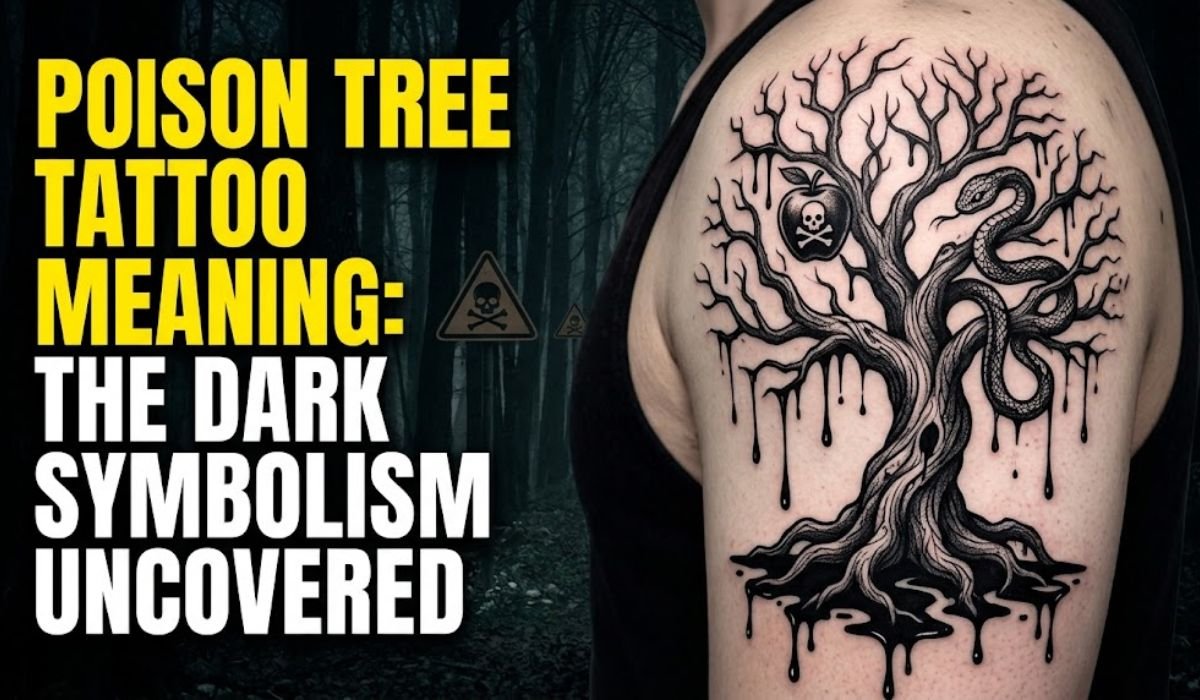
Quick Answer: What Does a Poison Tree Tattoo Mean?
A poison tree tattoo commonly symbolizes suppressed anger, hidden resentment, betrayal, deception, and the consequences of allowing negative emotions to grow. Its symbolism is often connected to William Blake’s 1794 poem A Poison Tree, which explores how concealed anger can develop into something destructive. Depending on the design and the wearer’s personal story, the tattoo can also represent emotional awareness, healing, and personal transformation.
TL;DR: Poison Tree Tattoo Symbolism
- Hidden anger: Represents emotions that remain unexpressed and gradually become destructive.
- Resentment and betrayal: Can symbolize painful experiences, broken trust, and unresolved emotional wounds.
- Revenge and deception: Reflects the consequences of secretly nurturing hostility toward someone.
- William Blake connection: Draws inspiration from his poem A Poison Tree, published in 1794.
- Personal growth: New leaves, flowers, or other design elements can represent recovery and moving beyond painful experiences.
What Does a Poison Tree Tattoo Symbolize?
A poison tree tattoo represents the darker side of human emotions, particularly feelings that are hidden rather than addressed. The tree provides a visual metaphor for how anger, bitterness, and resentment can develop over time and eventually affect relationships and personal well being.
However, the design does not have one universally accepted meaning. Some people connect it with a painful relationship, while others see it as a reminder to recognize destructive emotions before they take control.
1. Suppressed Anger and Hidden Emotions
One of the strongest interpretations of a poison tree tattoo is suppressed anger. It represents feelings that someone keeps inside instead of expressing or resolving them.
Like a tree that gradually grows from a small seed, resentment can develop when negative emotions remain unaddressed. What begins as frustration may eventually become bitterness, hostility, or a desire for revenge.
Someone choosing this tattoo might use it as a reminder that ignoring emotional problems does not necessarily make them disappear. Addressing difficult feelings can prevent them from affecting other parts of life.
2. Betrayal and Broken Trust
A poison tree can also symbolize betrayal, particularly when someone has experienced dishonesty or emotional hurt in a relationship. Its dark appearance may represent the lasting effects of broken trust and disappointment.
For example, a person might choose a tree with damaged branches and a poisonous apple to represent a relationship that appeared healthy but eventually caused emotional pain. This is a possible personal interpretation rather than a fixed meaning of the design.
3. Revenge and Hidden Hostility
Revenge is another interpretation connected to the poison tree’s literary symbolism. The image can represent hostility that grows quietly until it produces harmful consequences.
Instead of showing an immediate reaction to anger, the tree suggests a gradual process in which resentment develops over time. The poisonous fruit becomes a visual reminder of what can happen when someone deliberately nurtures negative feelings.
4. Toxic Relationships and Emotional Pain
Some people associate a poison tree tattoo with toxic relationships and unhealthy emotional attachments. The tree can represent an experience that initially seemed attractive or harmless but eventually became damaging.
A design featuring dark branches, exposed roots, and a single poisonous apple can communicate this interpretation without requiring additional words or symbols.
5. Healing and Personal Transformation
Although poison tree tattoos often have dark symbolism, they do not always communicate anger or revenge. A wearer can give the design a more hopeful meaning by connecting it with emotional awareness and personal growth.
For example, adding fresh leaves, flowers, or small signs of new growth can represent recovery after a difficult experience. The tree may symbolize the past, while the new growth represents the decision to move forward.
This interpretation is especially meaningful when someone wants to acknowledge a painful chapter without allowing it to define their future.
The Connection Between William Blake’s A Poison Tree and the Tattoo
The poison tree tattoo is often interpreted through William Blake’s poem A Poison Tree, published in his collection Songs of Experience in 1794.
The poem explores the difference between expressing anger openly and hiding it. The speaker explains that anger toward a friend disappears after it is communicated, while anger toward an enemy remains concealed and gradually grows.
Instead of resolving the conflict, the speaker secretly nurtures the negative emotion. The anger develops into a tree that produces a bright apple, which eventually attracts the enemy and leads to a destructive ending.
What Is the Main Message of the Poem?
The central message of A Poison Tree concerns the danger of allowing resentment and hostility to grow in secret. Blake uses the tree as a metaphor for emotions that develop when someone chooses deception and hidden anger instead of addressing a conflict.
The poem does not simply suggest that experiencing anger is wrong. It highlights the destructive consequences of deliberately nurturing hostility and allowing it to influence behavior.
How Does the Poem Influence Tattoo Symbolism?
The poem provides a meaningful foundation for the tattoo’s darker interpretations:
- The growing tree: Represents anger and resentment developing over time.
- The bright apple: Represents the visible result of concealed hostility and the danger hidden beneath an attractive appearance.
- The enemy: Reflects the consequences of unresolved conflict and deliberate deception.
- The final scene: Emphasizes the destructive outcome of nurturing resentment.
Not every poison tree tattoo is directly inspired by Blake. However, his poem offers one of the clearest literary explanations for why the image is associated with hidden anger, deception, and emotional consequences.
Historical note: Blake’s poem was published in 1794. An earlier notebook draft used the title Christian Forbearance, but the published work is known as A Poison Tree.
For the original literary context, readers can consult the Academy of American Poets, Poetry Foundation, and the University of Toronto’s Representative Poetry Online.
What Do the Different Elements of a Poison Tree Tattoo Mean?
The individual parts of a poison tree design can communicate different ideas. Understanding these elements helps explain why two tattoos featuring the same general subject may tell completely different stories.
Roots: Buried Emotions and Past Experiences
Exposed or twisted roots can represent the hidden beginnings of emotional pain. They may symbolize childhood experiences, difficult memories, unresolved conflicts, or feelings that have influenced someone’s decisions.
Deep roots can also communicate how strongly an experience has affected a person’s life. This interpretation works particularly well in designs that emphasize the roots more than the branches.
Trunk: Strength and Emotional History
The trunk can represent the central story behind the tattoo. A thick, damaged trunk might suggest a difficult emotional journey, while a twisted trunk can communicate inner conflict or complicated experiences.
Its appearance gives the overall design a distinct personality and can help communicate whether the tattoo is intended to look threatening, reflective, or symbolic.
Branches: The Growth of Resentment
Twisted or spreading branches can symbolize how negative emotions extend into different parts of someone’s life. They may represent the growing consequences of anger, bitterness, and unresolved conflict.
Bare branches can create a lonely or unsettling appearance, while dense branches can make the tree look overwhelming and powerful.
Poisonous Apple: Temptation and Hidden Danger
The apple is one of the most recognizable elements associated with Blake’s poem. It can represent temptation, deception, concealed hostility, and the consequences of nurturing resentment.
A bright red apple against a dark tree creates a strong visual contrast. It can suggest that something attractive on the surface may hide a harmful reality.
Dead Branches and New Leaves: Loss and Renewal
Dead branches can communicate emotional exhaustion, loss, and the effects of painful experiences. New leaves or flowers can introduce a different interpretation by suggesting recovery and transformation.
Combining dead branches with fresh growth creates a visual contrast between what someone has experienced and what they hope to become.
Popular Poison Tree Tattoo Designs and Their Meanings
The visual style can change the mood of a poison tree tattoo. Some designs emphasize the literary symbolism, while others focus on darkness, emotional pain, or personal transformation.
1. Minimalist Poison Tree Tattoo
A minimalist poison tree tattoo uses simple outlines, limited shading, and fewer details. It is suitable for someone who wants the symbolism without a large or complicated illustration.
A small tree with one apple can communicate the central idea while keeping the overall design subtle. Fine line details can also make the roots and branches look delicate.
2. Gothic Poison Tree Tattoo
A gothic poison tree tattoo emphasizes darkness, mystery, and emotional intensity. Artists may use heavy black shading, twisted branches, sharp silhouettes, and detailed roots.
This style works well for someone who wants the tattoo to communicate a darker interpretation of resentment, betrayal, or destructive emotions.
3. Blackwork Poison Tree Tattoo
Blackwork designs rely on solid black areas, strong outlines, and carefully arranged negative space. They can create a dramatic image without depending on multiple colors.
A blackwork poison tree can also remain visually striking when the design is simplified into a recognizable silhouette.
4. Poison Tree With a Red Apple
Adding a red apple creates an immediate focal point. The contrast between the fruit and dark branches can emphasize temptation, deception, and the consequences of hidden resentment.
This design is especially suitable for someone who wants the connection to Blake’s poem to be recognizable without including the entire tree in extensive detail.
5. Poison Tree With Flowers
Flowers can soften the appearance of a dark tree and introduce a hopeful interpretation. The combination may represent learning from difficult experiences and finding growth after emotional pain.
6. Poison Tree With a Snake
A snake can introduce additional symbolism involving temptation, danger, deception, or transformation. Its meaning depends on the design and the wearer’s intended message.
Because snakes carry different cultural and religious associations, this combination should be chosen carefully if a specific message is important.
Poison Tree Tattoo Placement Ideas
Placement does not have a universally accepted symbolic meaning. The best location depends on the size, shape, detail, and visibility you want from the design.
Poison Tree Tattoo on the Forearm
The forearm is a practical location for a vertical poison tree design. Its shape can accommodate the roots at the bottom, the trunk through the middle, and spreading branches near the upper portion.
An inner forearm tattoo can be easier for the wearer to view, while an outer forearm design can make the artwork more visible to others.
Before choosing the placement, consider:
- Whether the branches need enough space to remain recognizable.
- How much detail the artist can include at the selected size.
- Whether you want the tattoo to be easily visible or more discreet.
- How the design will follow the natural shape of your arm.
Small Poison Tree Tattoo Placement
A simplified poison tree can work on the wrist, ankle, or upper arm. However, very small designs may lose delicate details such as exposed roots, tiny branches, and fruit.
If the symbolic elements are important, discuss the minimum practical size with your tattoo artist before finalizing the stencil.
Larger Poison Tree Tattoo Placement
The upper arm, shoulder, back, and thigh can accommodate larger compositions. These locations provide more room for intricate branches, detailed roots, shading, and additional elements.
A larger design may be preferable if you want the tattoo to communicate a complete visual story rather than a simple tree silhouette.
How to Choose a Poison Tree Tattoo Stencil
A poison tree tattoo stencil is the outline or transfer design an artist uses to position the artwork before tattooing. Choosing the right stencil helps ensure that the important symbolic details remain clear.
Consider these points before approving a design:
- Choose the main message: Decide whether the tattoo should communicate suppressed anger, betrayal, emotional awareness, or personal growth.
- Select the main visual element: Decide whether the roots, twisted branches, or poisonous apple should receive the most attention.
- Match the design to the placement: A vertical composition may work well on the forearm, while a wider tree can suit the shoulder or back.
- Check the line details: Make sure small branches and other delicate elements are appropriate for the intended tattoo size.
- Discuss the final stencil: Ask the artist to show the placement and proportions before beginning the tattoo.
Avoid selecting a design only because it looks attractive online. A good stencil should also communicate the meaning you want and work with your chosen placement.
Poison Tree Tattoo Meaning vs. Other Tree Symbols
Not every dark tree tattoo has the same symbolism. Comparing related designs can help you decide whether a poison tree communicates the message you actually want.
| Design | Common symbolism | Main difference |
|---|---|---|
| Poison tree | Hidden anger, resentment, deception, consequences | Focuses on the destructive development of negative emotions. |
| Tree of Life | Growth, connection, vitality, family | Generally communicates life and interconnectedness. |
| Dead tree | Loss, endings, mortality, loneliness | Can represent an ending without the poison tree’s specific literary symbolism. |
| Poison apple | Temptation, hidden danger, deception | Focuses on the fruit rather than the growth of resentment. |
| Burning tree | Destruction, change, transformation | Emphasizes destruction through fire rather than concealed hostility. |
The poison tree design is particularly suitable when the intended message involves emotions that grow over time and eventually produce harmful consequences.
Common Misunderstandings About Poison Tree Tattoos
Because the design has dark symbolism, people sometimes assume it communicates one specific personality trait or experience. That assumption can be misleading.
A Poison Tree Tattoo Does Not Always Mean Revenge
Revenge is one possible interpretation connected to Blake’s poem, but it is not the only meaning. Someone may choose the design to represent emotional awareness, a difficult past, or a reminder not to nurture resentment.
It Does Not Automatically Mean Someone Is Toxic
A tattoo is not reliable evidence of someone’s character. The image may reflect an artistic preference, a literary interest, or a personal experience rather than an intention to hurt anyone.
Not Every Design Comes From William Blake
Although the poem is an important literary connection, some people may choose a poison tree because they like its visual appearance or want to create their own symbolism.
A Poison Tree Is Not the Same as Every Poisonous Plant
Blake’s tree is primarily a literary metaphor. A tattoo depicting a real poisonous tree, such as a manchineel, may have botanical or personal symbolism instead. The two interpretations should not automatically be treated as identical.
The Tattoo Does Not Have One Universal Religious Meaning
Blake’s poem can be discussed through biblical imagery, including the Garden of Eden and temptation. However, a poison tree tattoo does not automatically represent a particular religious belief or spiritual tradition.
Frequently Asked Questions
1. What does a poison tree tattoo mean?
A poison tree tattoo commonly represents suppressed anger, resentment, deception, betrayal, and the consequences of negative emotions. Its meaning can also reflect personal growth or recovery, depending on the wearer’s intention.
2. Is a poison tree tattoo inspired by William Blake?
Many interpretations connect the design to William Blake’s poem A Poison Tree, published in 1794. The poem explores how concealed anger can grow into resentment and produce destructive consequences.
3. What does the apple symbolize in a poison tree tattoo?
The apple can symbolize temptation, concealed danger, deception, and the results of nurtured resentment. Its interpretation is closely connected to the bright apple in Blake’s poem.
4. Can a poison tree tattoo have a positive meaning?
Yes. Some people use the design to represent emotional awareness, healing, self protection, and personal transformation. Adding flowers or new leaves can strengthen its hopeful interpretation.
5. Does a poison tree tattoo represent betrayal?
It can represent betrayal and broken trust when the wearer connects the design with a painful personal experience. However, betrayal is a possible interpretation rather than a universal definition.
6. Is a poison tree tattoo about revenge?
Revenge is one possible meaning, particularly because of the poem’s themes of hidden hostility and destructive consequences. The design can also communicate suppressed anger, resentment, or emotional reflection.
7. What does a poison tree tattoo on the forearm mean?
Forearm placement does not have a standardized symbolic meaning. People may choose this location because it provides a suitable vertical area for displaying the tree’s roots, trunk, and branches.
8. Can I use William Blake’s poem in my tattoo?
William Blake’s original 1794 poem is in the public domain, so its original text can generally be used without copyright permission. Check the wording against a reliable edition, especially if you use a modern edited or illustrated version.
9. What are the best styles for a poison tree tattoo?
Popular design directions include minimalist linework, gothic illustration, blackwork, and detailed tree designs with a red apple. The best choice depends on the intended symbolism, available space, and desired level of detail.
10. Does a poison tree tattoo have a religious meaning?
Blake’s poem can be interpreted through biblical imagery, but the tattoo does not have one established religious meaning. Its symbolism depends on the design and the wearer’s personal beliefs.
Key Takeaways
A poison tree tattoo is a powerful symbol of hidden anger, resentment, betrayal, deception, and the consequences of allowing negative emotions to grow. Its strongest literary connection comes from William Blake’s 1794 poem A Poison Tree, which explores how concealed hostility can develop into something destructive.
The roots, branches, and poisonous apple each offer opportunities to personalize the design. While a dark tree may represent painful experiences or unresolved emotions, flowers and new leaves can introduce themes of healing and transformation.
Ultimately, the most meaningful poison tree tattoo is one that communicates the story you want to tell. Understand its literary symbolism, choose design elements carefully, and work with a tattoo artist to create an image that reflects your intended message.
Sources and Further Reading
- Academy of American Poets: William Blake’s A Poison Tree.
- University of Toronto, Representative Poetry Online: Literary text and editorial information about Blake’s poem.
- Poetry Foundation: A Poison Tree and its literary context.
- Metropolitan Museum of Art: Historical context surrounding Blake’s Songs of Experience.

Hi, I’m William, the voice behind PrayerSign — a space dedicated to sharing powerful prayers and meaningful Bible verses for everyday life. My mission is to help people find peace, strength, and guidance through God’s word, no matter what situation they are facing.