Last verified: November 23, 2026
Quick Answer
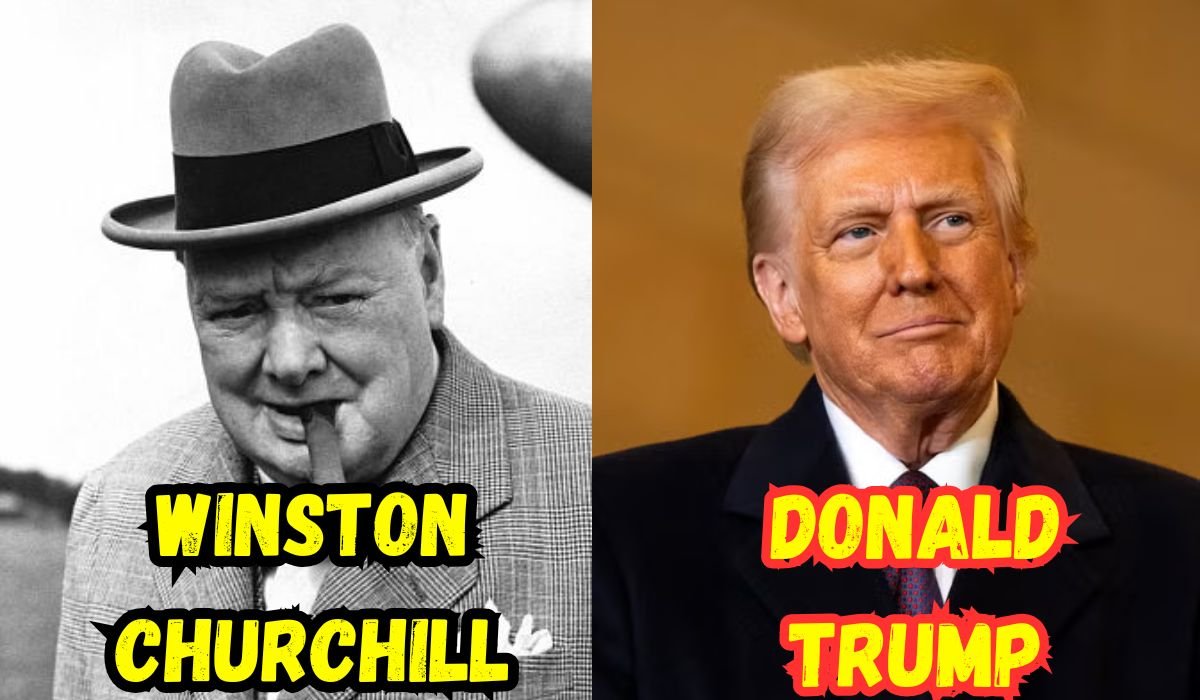
Winston Churchill and Donald Trump are connected through Trump’s repeated public references to the former British prime minister. Trump has invoked Churchill’s wartime leadership and communication style when discussing his own political leadership. Their most notable comparison occurred in September 2020 during the COVID 19 pandemic. However, their historical circumstances, political responsibilities, and leadership experiences were very different.
TL;DR
- Donald Trump has publicly referenced Winston Churchill as an example of historical leadership.
- One prominent comparison occurred in September 2020 when Trump discussed his handling of the COVID 19 pandemic.
- Trump also referenced Churchill’s speaking abilities in October 2024.
- In March 2026, Trump criticized British Prime Minister Keir Starmer by saying he was not Winston Churchill.
- Churchill led Britain during much of World War II, while Trump has served as president of the United States.
- Their connection is primarily political and historical, not a documented personal relationship.
What Is the Connection Between Winston Churchill and Donald Trump?
The connection between Winston Churchill and Donald Trump comes from Trump’s public admiration for and comparisons with the former British leader. Churchill’s reputation as a wartime prime minister has made him a historical reference point in discussions about political strength, public communication, and national leadership.
Trump has invoked Churchill when explaining his own approach to leadership and responding to political criticism. These references have attracted attention because Churchill led Britain through one of the most difficult periods in modern history, while Trump has faced very different political challenges as president of the United States.
There is no established personal relationship between the two men. Churchill died on January 24, 1965, while Trump was born on June 14, 1946. Their connection is therefore best understood through Trump’s public statements and the historical comparisons surrounding them.
Why Does Donald Trump Reference Winston Churchill?
Churchill is widely remembered for his determination, wartime speeches, and ability to communicate with the British public during a national crisis. His leadership became an important part of British history, particularly during the country’s struggle against Nazi Germany.
Trump’s references to Churchill draw on this reputation. By mentioning a famous wartime leader, Trump has connected his own public communication and political decisions with an established historical example of leadership.
However, referring to Churchill does not establish that the two leaders shared the same abilities, achievements, or historical significance. A political comparison needs to be examined in its original context.
Did Donald Trump Compare Himself to Winston Churchill?
Yes. One of the clearest examples occurred in September 2020, when Trump invoked Churchill’s wartime leadership while defending his decision to communicate calmly with the American public during the coronavirus pandemic.
The comparison attracted criticism because Churchill’s wartime communication frequently involved openly describing the seriousness of the threat facing Britain. Trump’s remarks raised questions about whether the two situations were sufficiently similar to justify the comparison.
When Did Donald Trump Reference Winston Churchill?
Trump’s references to Churchill have appeared in different political situations. Three notable examples help explain why their names continue to appear together.
1. Trump’s Churchill Comparison During the 2020 COVID 19 Pandemic
In September 2020, reporting about Trump’s comments on the coronavirus pandemic brought renewed attention to his comparison with Winston Churchill.
Trump defended his approach to communicating with the American public by invoking Churchill’s conduct during Britain’s wartime crisis. His argument drew on the idea that a national leader should provide reassurance during an uncertain and frightening period.
The comparison became controversial because the historical circumstances were different. Churchill addressed a country facing military attacks, while Trump was responding to a public health emergency.
Critics questioned whether Churchill’s wartime communication provided an appropriate comparison for Trump’s handling of the pandemic. Churchill’s speeches often acknowledged the danger directly while encouraging the British population to remain determined.
This example remains particularly relevant because it shows how Trump used Churchill’s historical reputation to defend his own approach to a national crisis.
2. Trump’s 2024 Comments About Churchill’s Speaking Abilities
Trump also referenced Churchill in October 2024 while discussing public speaking and leadership. The comments brought attention to Churchill’s reputation as one of the most recognizable political speakers of the twentieth century.
Churchill’s speeches played a significant role in maintaining public morale during World War II. His words communicated determination, warned against the dangers facing Britain, and encouraged resistance during an extremely difficult period.
Trump’s reference provided another example of Churchill being used as a comparison point in modern political discussion.
It is useful to distinguish admiration for a historical speaker from an assessment of whether two politicians have similar communication abilities. Those are separate questions.
3. Trump’s 2026 Remarks About Keir Starmer and Churchill
In March 2026, Trump criticized British Prime Minister Keir Starmer during a disagreement involving Britain’s position on American military action against Iran.
Trump said Starmer was not Winston Churchill, invoking the former prime minister as a contrast when criticizing the British leader’s response.
The remark added another example of Churchill’s continued presence in political discussions. It also demonstrated that Trump’s references to Churchill were not limited to comparisons involving his own leadership.
Churchill’s name continues to carry historical significance in discussions about British leadership, international security, and relations between the United Kingdom and the United States.
Winston Churchill vs. Donald Trump: Similarities and Differences
Winston Churchill and Donald Trump are influential political figures from different historical periods. Both have attracted international attention for their communication styles and approaches to leadership, but their political circumstances and responsibilities were not the same.
Understanding their differences is essential before accepting any comparison between them.
| Category | Winston Churchill | Donald Trump |
|---|---|---|
| Nationality | British | American |
| Political role | Prime Minister of the United Kingdom | President of the United States |
| First major period in office | 1940 to 1945 | 2017 to 2021 |
| Second period in office | 1951 to 1955 | 2025 onward |
| Historical context | World War II and postwar Britain | Modern American domestic and international politics |
| Recognized for | Wartime leadership and historical speeches | Political communication and presidential leadership |
| Historical legacy | Major figure in twentieth century British history | Contemporary American political figure |
Their Leadership and Communication Styles
Churchill became famous for his ability to communicate determination during Britain’s wartime crisis. His speeches acknowledged the seriousness of the situation while encouraging people to continue resisting the threat facing their country.
Trump is known for a distinctive political communication style that includes direct language, repeated slogans, personal criticism, and a strong focus on public appearances. His communication approach has played an important role in his political identity.
Both leaders have used public communication to influence how audiences understand political events. However, their communication methods developed in different political environments and should not automatically be treated as equivalent.
Their Political Roles and Historical Circumstances
Churchill became prime minister in 1940, when Britain faced the threat of Nazi Germany and the possibility of invasion. His government had to manage a major international war, maintain military resistance, and work with Allied leaders.
Trump’s presidency belongs to a different historical period. His responsibilities have included American domestic policy, international diplomacy, economic decisions, and national security.
The challenges faced by both leaders cannot be measured using exactly the same historical standards. Their countries, political institutions, international circumstances, and available resources were different.
Why Their Leadership Cannot Be Considered Identical
Comparing political leaders can help explain their communication methods and public images, but it can also oversimplify history.
Churchill’s wartime leadership involved decisions made during an existential military threat to Britain. Trump’s political leadership has taken place in a modern democratic system with different institutions, challenges, and international conditions.
Both men have been associated with strong public personalities, but this similarity alone does not establish equal historical achievements or leadership effectiveness.
Who Was Winston Churchill and Why Was He Important?
Winston Churchill was a British politician, military officer, writer, and prime minister. He is best remembered for leading Britain during much of World War II and helping maintain resistance against Nazi Germany.
Churchill was born on November 30, 1874, at Blenheim Palace in Oxfordshire, England. He entered British politics and held several government positions before becoming prime minister in May 1940.
His historical reputation is closely connected to his wartime speeches, political decisions, and leadership during a period when Britain faced extraordinary military and national challenges.
Churchill’s Role in World War II
Churchill became prime minister in 1940 after the resignation of Neville Chamberlain. Britain was facing serious military setbacks in Europe, and the German military threat was growing.
Churchill played several important roles during the war:
- National leadership: He led the British government during a critical period of the war.
- Public communication: His speeches encouraged determination and resistance among the British population.
- International cooperation: He worked with Allied leaders, including Franklin D. Roosevelt and Joseph Stalin.
- Military strategy: He participated in major wartime decisions concerning Britain’s military position and Allied operations.
- National morale: His public messages helped communicate the government’s determination to continue fighting.
Churchill remained prime minister until 1945. He returned to office in 1951 and served again until 1955.
His Leadership and Historical Legacy
Churchill’s legacy is closely associated with his wartime leadership and his ability to communicate during a national emergency. His speeches remain among the most recognized examples of political communication in modern British history.
However, a balanced understanding of Churchill also requires acknowledging that his political career was controversial. His views and decisions, particularly those involving the British Empire and colonial rule, have received substantial historical criticism.
Recognizing Churchill’s importance during World War II does not require overlooking the wider debates surrounding his political record.
What Do We Actually Know About Their Connection?
The documented connection between Winston Churchill and Donald Trump is based primarily on Trump’s public references to Churchill and the historical comparisons surrounding those statements.
It is helpful to separate established information from interpretations that cannot be treated as historical facts.
| Claim | What the evidence supports |
|---|---|
| Trump has referenced Churchill | Documented in public reporting. |
| Trump compared his pandemic communication with Churchill’s wartime leadership | Documented in September 2020 reporting. |
| Trump referenced Churchill’s speaking abilities | Reported in October 2024. |
| Trump invoked Churchill when criticizing Starmer | Reported in March 2026. |
| Churchill and Trump had identical leadership styles | Not established. This is an interpretation. |
| Churchill personally influenced Trump’s political decisions | Not established by the evidence discussed here. |
The distinction matters because political comparisons are not the same as documented historical relationships. Trump’s references establish that Churchill has been used as a point of comparison, but they do not prove that both leaders shared the same historical achievements or political abilities.
Frequently Asked Questions
1. What Is the Connection Between Winston Churchill and Donald Trump?
Their connection comes from Trump’s public references to Churchill and comparisons involving wartime leadership and political communication. There is no established personal relationship between the two men.
2. Did Donald Trump Compare Himself to Winston Churchill?
Yes. In September 2020, Trump invoked Churchill’s wartime leadership while defending his approach to communicating with the American public during the COVID 19 pandemic.
3. Why Does Donald Trump Reference Winston Churchill?
Churchill is remembered for his wartime leadership, determination, and powerful speeches. Trump has used Churchill as a historical reference when discussing leadership and public communication.
4. Did Donald Trump Admire Winston Churchill?
Trump has made positive references to Churchill and invoked him as an example of leadership and communication. These public comments demonstrate recognition of Churchill’s historical reputation, although they do not establish every aspect of Trump’s personal historical views.
5. Were Winston Churchill and Donald Trump Similar Leaders?
They shared some broad similarities in their prominent public personalities and communication styles. However, their political environments, historical responsibilities, and leadership experiences were significantly different.
6. What Did Trump Say About Churchill During COVID 19?
In September 2020, Trump invoked Churchill’s wartime leadership while explaining his own decision to communicate calmly during the coronavirus crisis. The comparison attracted criticism because the two leaders faced different types of national emergencies.
7. What Are the Main Differences Between Churchill and Trump?
Churchill led Britain during World War II and worked with Allied leaders against Nazi Germany. Trump has served as president of the United States in the modern political era, facing different domestic and international challenges.
8. Did Winston Churchill and Donald Trump Ever Meet?
Churchill died on January 24, 1965, while Trump was born on June 14, 1946. Their lifetimes overlapped, but the historical evidence discussed here does not establish that they personally met.
9. What Was Winston Churchill Famous For?
Churchill was famous for leading Britain during much of World War II, his political speeches, and his role in the Allied effort against Nazi Germany. He also served as British prime minister during two separate periods.
10. What Did Donald Trump Say About Keir Starmer and Winston Churchill?
In March 2026, Trump criticized British Prime Minister Keir Starmer by saying that he was not Winston Churchill. The comment was connected to disagreements over Britain’s position on American military action against Iran.
Key Takeaways
- Winston Churchill and Donald Trump are connected through Trump’s public references to the former British prime minister.
- The September 2020 comparison involving COVID 19 is one of their most notable documented connections.
- Trump also referenced Churchill in 2024 and invoked his name when criticizing Keir Starmer in 2026.
- Churchill’s historical importance comes largely from his leadership of Britain during World War II.
- Although both leaders have recognizable public communication styles, their historical circumstances and political responsibilities were very different.
- Their connection should be understood as a political and historical comparison rather than an established personal relationship.
Ultimately, Winston Churchill and Donald Trump are connected by the way Trump has invoked Churchill’s historical reputation in modern political discussions. Understanding the context behind those references provides a clearer picture than treating the two leaders as identical historical figures.

Hi, I’m William, the voice behind PrayerSign — a space dedicated to sharing powerful prayers and meaningful Bible verses for everyday life. My mission is to help people find peace, strength, and guidance through God’s word, no matter what situation they are facing.